The Law of One
The channeled text that keeps showing up in serious circles, with a cosmology that overlaps remarkably with what every contemplative tradition has been pointing at for thousands of years.
The Law of One is the title of a five-book channeled work produced between 1981 and 1984 by L/L Research, a small group in Kentucky. The source claimed to be a single integrated social memory complex calling itself Ra. The material consists of 106 question-and-answer sessions covering metaphysics, history, the structure of consciousness, the architecture of the cosmos, and the practical work of spiritual evolution.
This page covers what the Law of One actually claims, the core teaching, the density model of consciousness evolution, the cross-references to other traditions, and why this channeled text keeps being taken seriously by people who are otherwise skeptical of channeled material.
What the Ra Material Is
The Law of One was produced by three people in Kentucky: Don Elkins (a former University of Louisville physics professor and airline pilot), Carla Rueckert (the channel), and Jim McCarty (the scribe). Their method was specific. Carla would enter a deep trance state, and a presence calling itself Ra would speak through her. Don asked questions. Jim transcribed.
The sessions ran from January 1981 to March 1984, ending when Carla's health deteriorated. The transcripts are unedited apart from minor cleanup. They are freely available at lawofone.info. The total corpus is approximately 1,500 pages.
What distinguishes the Ra material from most channeled work is several specific features:
- The information is consistent. Over three years and 106 sessions, the cosmology, the entities, the technical vocabulary, and the metaphysical claims do not contradict each other. The internal coherence is the most striking feature.
- The voice is technical, not theatrical. Ra speaks in a precise, slightly stilted English, treating the questioner as an intellectual peer. There is no mysticism-for-its-own-sake. The diction is recognizable.
- The questioner was rigorous. Don Elkins was a serious investigator with a physics background. His questions are detailed, technical, and often probe for inconsistencies. He did not get inconsistencies.
- The material does not flatter. Ra repeatedly refuses to give definite predictions, declines questions that would interfere with free will, and points out that the seekers should be doing their own work rather than asking for answers.
- The cosmology overlaps with traditions Don and Carla had not studied. Specific terms and concepts appear that match Vedanta, Sufism, Hermeticism, and Gnostic texts the team had not specifically researched. The convergence is striking.
The conservative reading: the material is a remarkable subconscious synthesis produced by Carla's mind under trance, drawing on her wide reading. The bolder reading: the material is from a non-physical intelligence as it claims. The traditions had words for both possibilities and treated them as worth investigating either way.
The Law of One
The title of the material is also its core claim. The Law of One states that all is one. All apparent distinctions, between self and other, between matter and spirit, between Creator and creation, are appearances within a single underlying reality. Every contemplative tradition has a version of this. The Ra material specifies it as the foundational principle from which everything else derives.

From the Law of One, the rest of the metaphysics is derived:
- The Creator is the One. Not a being who created. Being itself, expressing as everything. Each apparent entity is the Creator knowing Itself in a specific way.
- Free will is the prime distortion. The first apparent distinction within the One is the gift of free will, which allows the Creator to explore itself through apparently separate viewpoints.
- Love is the second distortion. The energetic principle by which the One creates itself. Equivalent to the logos in Christian theology.
- Light is the third distortion. The medium of manifestation. The substance of all apparent forms. Convergent with what the contemplative traditions called the inner light.
- The remaining distortions are the laws of manifest existence. Specific principles by which the One appears as the many.
The framework is identical in structure to Plotinus's emanation from the One in Neoplatonism, to the Kabbalistic emanation through the sephirot (see Kabbalah), and to the Vedantic teaching of Brahman with its veil of Maya. The Ra material uses different vocabulary but arrives at the same architecture.
The Eight Densities of Consciousness
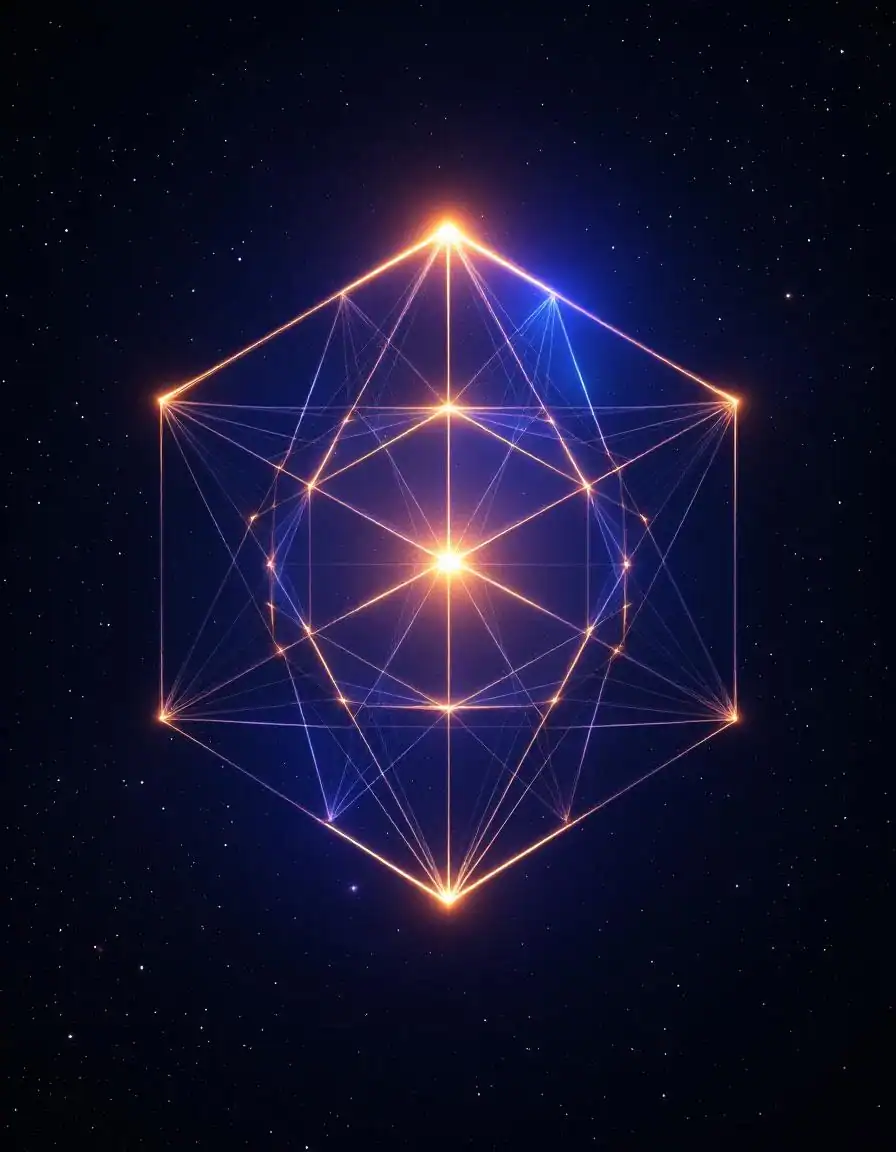
The Ra material describes a specific structure for the evolution of consciousness through eight discrete levels, called densities. The densities are not better or worse than each other in a moral sense. They are stages of awareness that the One uses to explore Itself.
- First density. Pure being, mineral and elemental consciousness. The awareness of inanimate matter, water, fire, air, earth. The foundation.
- Second density. Growth-oriented consciousness. Plant and animal life. The development of distinct individual awareness within the unified field.
- Third density. Self-awareness. The recognition of being a self that can know it is a self. This is where humans are. The choice between service to self and service to others is made at this density and determines progression.
- Fourth density. Love. The graduation from third density. Beings at this level have made the choice and operate from compassion or from manipulation, depending on which path they chose at third.
- Fifth density. Wisdom. The integration of love with deep understanding. Less emotional, more refined.
- Sixth density. The unification of love and wisdom. The path of service to self and service to others are said to converge at the end of this density, since both paths eventually recognize the underlying unity.
- Seventh density. The gateway back to the One. The completion of individual identity, preparing to return to the unity of source.
- Eighth density. The return to the One. Identical with the first density of the next octave.
The system is similar to the bhumis in Mahayana Buddhism, the chakras in yogic anatomy (one chakra per density), the maqamat in Sufism, and the rungs of the Ladder of Divine Ascent in Christian contemplation. Different vocabularies. Similar structure. The convergence is the consistent finding.
Service to Others, Service to Self
The most consequential teaching in the Ra material, for practical purposes, is the description of two paths of conscious evolution. Both paths lead back to the One eventually, but they look very different along the way.
- The Service to Others path. Polarization through giving, sharing, compassion, recognition of the Creator in every other apparent self. The path most spiritual traditions teach. Has the advantage of being congruent with the actual structure of reality (since all selves are the One Self appearing).
- The Service to Self path. Polarization through manipulation, accumulation, control, recognition of the Creator only in oneself. The path of the predatory and the imperial. Has the disadvantage of being incongruent with reality, which makes it harder to maintain at higher densities.
The Ra material is unusual in treating both paths as legitimate routes back to source, while making clear that the Service to Others path is far more efficient and the Service to Self path becomes increasingly difficult past certain thresholds. The choice is made at third density (where humans are) and the polarization, once decided, generally determines progression for several densities forward.
The practical implication: how a person treats other apparent selves determines their evolutionary direction. The principle is identical to what every wisdom tradition has taught. The Ra material's contribution is the structural framework that explains why this is so. Not arbitrary moralism. Direct alignment with the underlying structure of reality.
Chapter 22. Sovereignty.
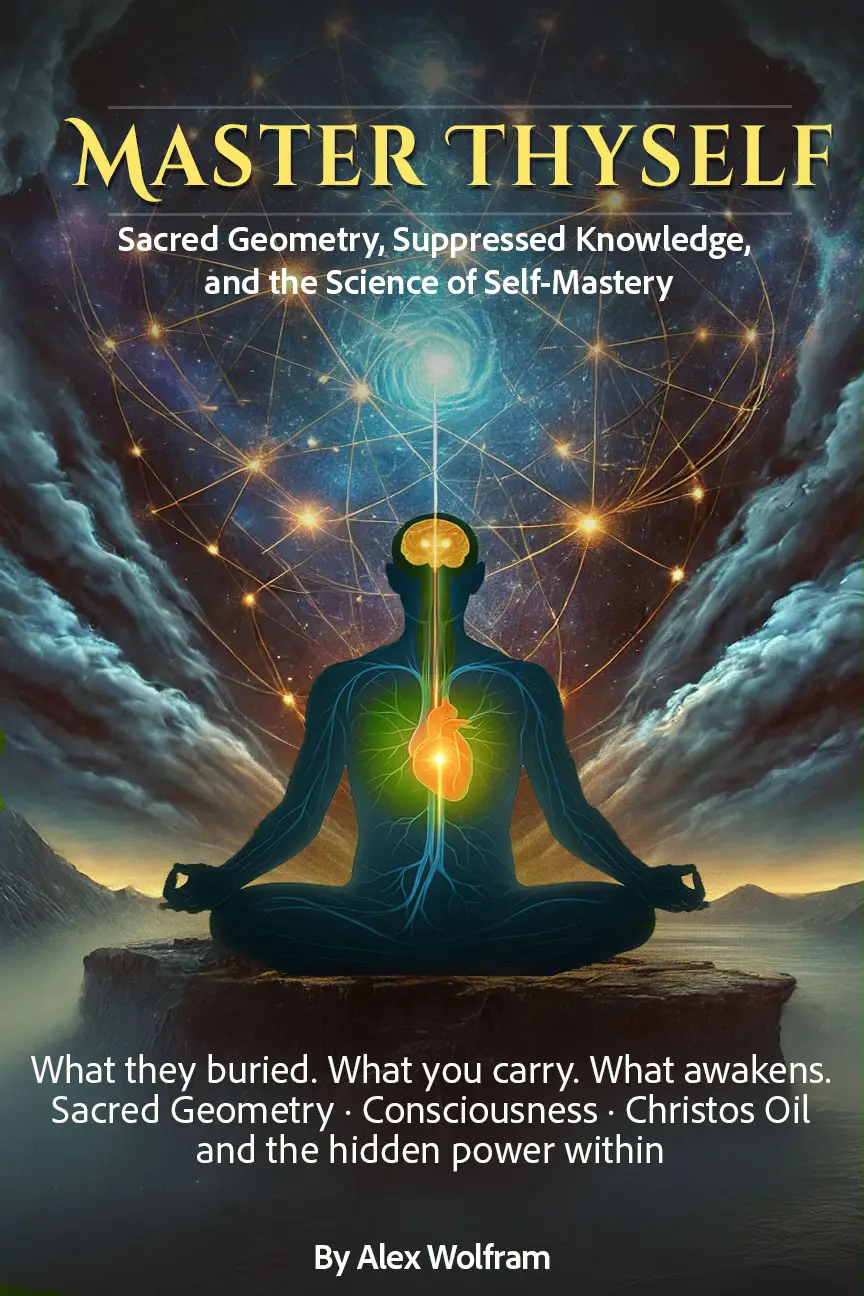
The Law of One sits within the final integrated chapter of Master Thyself, which weaves the Ra material with parallel teachings from Vedanta, Sufism, Hermeticism, Gnosticism, and the Christian contemplative tradition. The full polarization architecture, the eight densities, the choice and its implications.
How the Material Lines Up with Tradition
The most striking feature of the Ra material, for serious investigators, is the degree to which it confirms and integrates teachings from contemplative traditions across world history. The team that produced it had read widely but had not specifically studied the parallels that emerged.
- Hindu Vedanta. The Law of One = Brahman. The densities = the gunas and the cosmic cycles. Free will as the first distortion = Maya. The match is close enough that Vedantic scholars who read the Ra material often find the vocabulary novel but the framework familiar.
- The Hermetic tradition. "As above so below," the seven principles, the planetary correspondences. Read the deeper treatment on "as above, so below".
- Gnosticism. The recognition of an apparent reality (the demiurge's world) and a deeper source (the Pleroma). The Ra material's distinction between third-density material reality and the higher-density underlying One is structurally identical. See Gnosticism.
- Egyptian temple tradition. Ra (the Egyptian solar deity) and the social memory complex calling itself Ra in the material share the name. The Ra material claims, controversially, to have been the source of certain Egyptian temple teachings that became corrupted over millennia. The claim is checked, the linguistic parallels exist, the implication is unprovable.
- The Dolores Cannon work. Independent of the Ra material, Dolores Cannon's hypnosis sessions over decades produced similar cosmological structures from clients with no exposure to the Law of One. The convergence is suggestive.
- The Christian contemplative tradition. The graduation from third to fourth density maps directly onto the death-and-resurrection symbolism of Christian mysticism. Service to others as the evolutionary path is what the Sermon on the Mount teaches operationally.
No single cross-reference proves the Ra material is more than synthesis. The accumulation of convergences across cultures and centuries is the data that makes the material worth taking seriously rather than dismissing. The traditions that arrived at similar conclusions are independent. The pattern is the evidence.
Frequently Asked Questions
What is the Law of One?
The Law of One is a five-book channeled work produced between 1981 and 1984 by Don Elkins, Carla Rueckert, and Jim McCarty in Kentucky. The source claimed to be a single integrated consciousness calling itself Ra. The 106 sessions cover metaphysics, the structure of consciousness, the history of Earth, and the practical work of spiritual evolution. The core teaching is that all is one underlying reality, expressed through many apparent forms.
Is the Law of One real or made up?
The conservative reading: the material is a remarkable subconscious synthesis produced by Carla Rueckert's mind under trance. The bolder reading: the material is from a non-physical intelligence as it claims. Both readings have to account for the internal coherence over 1,500 pages and three years, the technical precision, and the convergence with traditions Carla had not specifically studied. The question cannot be settled by external means. Different readers reach different conclusions after extended engagement with the texts.
Who is Ra in the Law of One?
Ra is described in the material as a sixth-density social memory complex, a group of individual consciousnesses that have merged into a unified collective awareness while retaining their distinct experience. The same name as the Egyptian solar deity is not coincidental; Ra claims, controversially, to have been involved with ancient Egyptian teaching that became corrupted over time.
What are the densities in the Law of One?
Eight discrete levels of consciousness evolution, from the mineral consciousness of first density through the return to source at eighth density. Third density (where humans currently are) is the level of self-awareness. The choice between service to others and service to self determines progression beyond third density.
What is the difference between service to others and service to self?
Two paths of conscious evolution. Service to others polarizes through giving, sharing, and recognition of the Creator in every other being. Service to self polarizes through accumulation, manipulation, and recognition of the Creator only in oneself. Both lead back to source, but service to others is far more efficient and service to self becomes structurally unsustainable past certain levels of evolution.
Why is the Law of One taken seriously?
The internal coherence of the 1,500 pages across three years, the technical precision of the voice, the convergence with contemplative traditions Carla had not studied, and the rigorous questioning by Don Elkins. The material does not fit easy categories of channeled work, mystical text, or philosophical treatise. Whatever its source, it is unusual enough to merit serious engagement.