Tom Campbell My Big TOE: 5 Things the Trilogy Gets Right
Campbell built a serious framework. He just stopped short of the embodied protocol the contemplative traditions had already worked out.
Tom Campbell My Big TOE trilogy (2003) is the most rigorous mainstream attempt to argue that consciousness is fundamental and reality is informational. Campbell brings credentials, a NASA physics background, decades of consciousness research, plus the discipline to build a model that does not require religious framing. The framework is strong. The protocol is the gap. This page covers both honestly.
Campbell got the architecture right. He missed the biology. The book is a strong gateway, not the destination.
Tom Campbell's My Big TOE framework in five sentences
Campbell's central thesis: consciousness is fundamental, not derived from matter. Reality is information processed within a digital virtual reality system, what he calls "TBC," The Big Computer. Individual consciousness units are subsystems within a larger learning system whose purpose is to lower entropy, which Campbell defines as movement toward greater coherence and love. The physical universe is one rendered output of this larger informational system. Free will, evolution, and what we call paranormal phenomena all become coherent inside this model in ways they are not inside materialism.
The trilogy spans more than 800 pages and works the framework out in technical detail. Campbell argues from physics, from his decades of out-of-body research with Robert Monroe, and from the pattern of consistent results across consciousness experiments. He builds the case carefully, names his uncertainties, and refuses easy answers. Compared to most adjacent literature, the discipline is unusual.
This is part of why the book has the audience it has. Readers who would dismiss Alien Interview as fabricated take Campbell seriously because he built his framework like an engineer rather than like a mystic. The framework is broadly compatible with what the contemplative traditions described. Campbell mostly arrived at it from a different angle. The convergence with ancient traditions is striking.
Five things Tom Campbell My Big TOE gets seriously right
Consciousness as fundamental, not emergent
Campbell argues that consciousness is the substrate from which physical reality emerges, not the other way around. This is the same position Max Planck took, the same position quantum interpretation requires when taken seriously, and the same position every ancient contemplative tradition reached. Campbell arrived at it through physics. The traditions arrived at it through method. The convergence is the data.
Reality as informational
Campbell's framing of reality as information being processed by a larger system is the same framework simulation theory uses, expressed in slightly different language. The physical world is rendered output. The substrate is information. Modern physics keeps quietly converging on this view. Campbell stated it openly when most physicists were still afraid to.
The system has a purpose: entropy reduction
Campbell argues that the larger consciousness system runs for a reason, lowering entropy, which he equates with the cultivation of coherence, love, and integrated awareness. This is the same diagnosis the Sufis gave (movement toward unity), the Hindus gave (movement toward Brahman), and the Christian mystics gave (movement toward divine union). The terminology differs. The structure is identical.
Out-of-body experience as legitimate research data
Campbell's two decades of consciousness research with Robert Monroe at the Monroe Institute included rigorous protocols that mainstream science still refuses to engage with. Campbell takes the data seriously and builds his framework to accommodate it. Whether or not every detail of his interpretation is correct, the willingness to treat the data as data is the right move. Redacted, read Chapter 22
The double-slit experiment as confirmation
Campbell uses the double-slit experiment as foundational evidence for his framework, and his interpretation is largely correct. Reality finalizes only when observed. The system is not solid; it is rendered. He proposed in 2017 a specific physics experiment to test his interpretation directly, the "Campbell experiment," some versions of which have been attempted with results consistent with his predictions.
Three places the trilogy stops short

The architecture is strong. The protocol is incomplete. These are not contradictions of Campbell's framework. They are extensions Campbell did not pursue and which the contemplative traditions filled in long before Campbell wrote the book.
Limited engagement with the embodied biology
Campbell's framework treats consciousness as software running on a substrate. He does not engage seriously with the body as the access point. The contemplative traditions, by contrast, all converged on specific bodily mechanisms, breath, posture, fasting, sleep cycle, glandular activation, that produce reliable shifts in awareness. The mystics did not just meditate. They worked the biology. Campbell skips this layer almost entirely.
The omission matters because the access protocol the traditions developed depends on the biology. A framework that treats consciousness as disembodied information cannot explain why certain physical practices produce certain mental states reliably. Redacted, read Chapter 21
No engagement with the Demiurge framework
Campbell's larger consciousness system is presented as benign. The Gnostic, Manichaean, Tibetan, and Cathar traditions all argued the opposite, that the operating layer of this reality is bounded, defensive, and dependent on the inhabitants not understanding the architecture. Campbell does not engage with this.
Whether the Gnostics were correct is a separate question. The point is that Campbell's framework does not include the possibility, and as a result it does not address why certain features of the system, forgetfulness at death, the active suppression of the contemplative traditions, the pattern of institutional capture of awakening frameworks, exist at all. The Demiurge framework covers what Campbell skips.
Light on practical exit protocol
Campbell describes meditation and out-of-body practice as access points, but the practical protocol stays general. He does not name specific timing, specific cycles, specific physiological states, or the inner mechanism the contemplative traditions agreed on across cultures.
This is the gap that makes My Big TOE a description rather than a manual. The contemplative traditions all left manuals. The Yoga Sutras of Patanjali. The Tibetan Six Yogas of Naropa. The Sufi maps of the stations. The Christian mystical itineraries. The texts are specific, embodied, and timed to physiology. Campbell's framework is compatible with these but does not integrate them. Redacted, read Chapter 22
How Tom Campbell got to My Big TOE
Understanding the background helps calibrate how seriously to take the framework. Campbell did not arrive at Tom Campbell My Big TOE from a meditation cushion. Tom Campbell My Big TOE came from physics, not contemplation.. He arrived from physics and from twenty-plus years of consciousness research at one of the most rigorous parapsychology programs ever run.
The author of Tom Campbell My Big TOE, Campbell holds graduate degrees in physics and worked for the United States Department of Defense and NASA before writing Tom Campbell My Big TOE, primarily in missile defense modeling. That physicist background shapes the entire Tom Campbell My Big TOE framework. modeling and large-scale systems analysis. He spent his career inside the discipline that argues entropy decides everything, and his framework reflects that. My Big TOE defines purpose itself as entropy reduction, which is a physicist's instinct, not a mystic's. Most spiritual frameworks define purpose in human emotional terms. Campbell defines it in thermodynamic terms.
The other half of the Tom Campbell My Big TOE background is the Monroe Institute, where in the 1970s and 1980s he worked alongside Robert Monroe on consciousness research, including out-of-body experience protocols, binaural beat audio induction, and what Monroe called "Hemi-Sync" states. The institute ran rigorous experimental protocols, kept detailed records, and produced data that mainstream science has consistently refused to engage with. Campbell did not go in as a believer. He went in as a physicist trying to figure out what was actually happening, and stayed for two decades because the data kept producing reproducible patterns.
This combination is rare. Most consciousness researchers do not have a hard physics background. Most physicists do not engage with consciousness research data at all. My Big TOE is what Tom Campbell My Big TOE shows when one person has both, sustained over decades, and refuses to discard either side of the data.
How to read the trilogy without getting lost
The three volumes of My Big TOE are dense. New readers of Tom Campbell My Big TOE regularly stall in the first hundred pages because Campbell is methodical to a fault. He builds the framework brick by brick and refuses to skip ahead, which is admirable for rigor and difficult for casual reading. Two paths through it work better than reading straight through.
Path 1: Awareness, Discovery, Inner Workings
This is the trilogy in its published order. Book 1: Awareness sets the philosophical and methodological foundation. Book 2: Discovery walks through how Campbell arrived at the framework via the consciousness research. Book 3: Inner Workings applies the framework to specific phenomena (paranormal experience, free will, evolution, the role of love). Read in order if you want the rigor. This path takes most readers six to eight weeks at sustained pace.
Path 2: Discovery first, then Awareness, then Inner Workings
For readers who want the experiential motivation before the theoretical foundation, start with Book 2: Discovery. This is where Campbell describes the consciousness research that led him to the framework. It reads more like memoir than physics, and most readers find it the most engaging volume. Then go back to Book 1: Awareness for the rigorous foundation. Book 3 closes it out. This path takes about the same total time but feels less front-loaded with abstraction.
For the reader who wants the framework but not the full trilogy, Campbell has given hours of public talks summarizing the model. The 2017 Calgary lecture is the most-cited entry point. It compresses the core argument into about ninety minutes. My Big TOE readers who watch the lecture first usually report the books read faster afterward.
How My Big TOE compares to Bostrom, Bohm, and Philip K. Dick

Campbell is not the only modern thinker who arrived at a consciousness-fundamental, reality-as-information framework. Knowing where his framework agrees and diverges from the others helps locate it.
Versus Nick Bostrom
Bostrom argues from probability and statistics that we are likely in a simulation. Campbell agrees with the conclusion but argues from physics and direct consciousness research. Bostrom does not engage with what living inside the simulation is like or what to do about it. Campbell does. The two frameworks are compatible. Bostrom is the philosophical foundation, Campbell is the operational extension.
Versus David Bohm
Bohm's holographic universe model proposed that physical reality is a projection of an "implicate order," a deeper substrate where everything is interconnected. Campbell's framework agrees that reality is informational and projected, but uses a different metaphor (digital virtual reality rather than hologram). Both reach similar conclusions about non-locality and observer effects. Campbell is more recent and engages more directly with consciousness research data Bohm did not have access to.
Versus Philip K. Dick
Dick's "reality is updating" framework, presented in his 1977 Metz lecture and elaborated in The Exegesis, proposed that the present is being continuously rewritten and that some humans catch the residue. Campbell's framework allows for this in principle (his TBC, The Big Computer, can update its own variables) but does not emphasize it. Dick was more interested in the strangeness, Campbell is more interested in the architecture. Reading Campbell after Dick produces a useful "now what does this actually mean" effect. Redacted, read Chapter 22
The architecture, plus the biology Campbell skipped
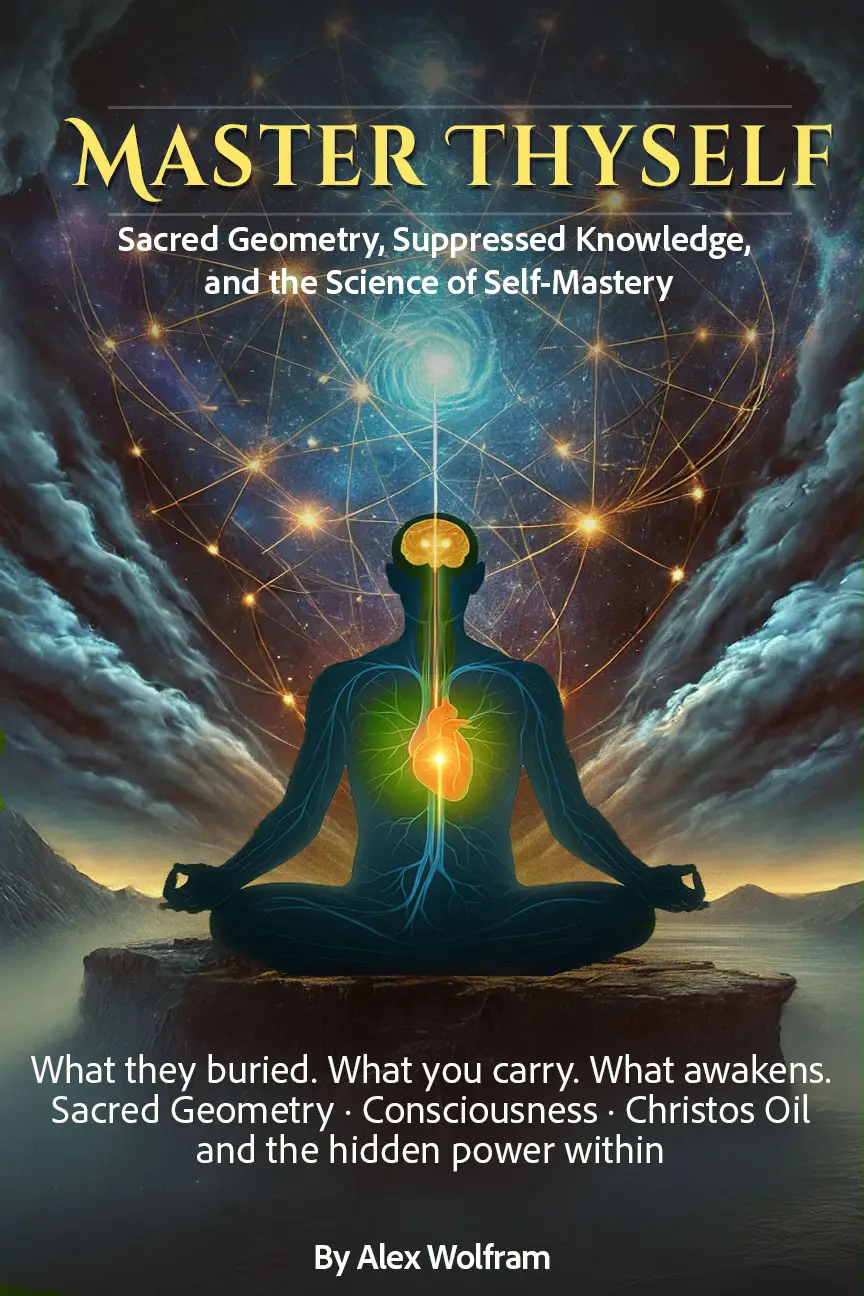
Campbell got the simulation framework right. Master Thyself covers the same architecture, plus the embodied protocol the contemplative traditions all converged on, plus the Demiurge layer Campbell did not engage with. Same diagnosis. Different stack. Practical detail Campbell deliberately left for someone else.
Amazon 30-day return window. If the book does not deliver, send it back.
Common questions from My Big TOE readers
Is Tom Campbell legitimate?
Yes. Campbell holds a graduate degree in physics, worked at NASA on missile defense modeling, and spent two decades doing consciousness research with Robert Monroe at the Monroe Institute. His credentials are verifiable. He is one of the most rigorous popularizers of the consciousness-as-fundamental position. He does not overclaim, names his uncertainties, and refuses to push beyond what the framework supports.
Should I read all three books in the trilogy?
If you have time, yes. The first volume builds the framework, the second covers application, the third covers implications. If you have limited time, the first volume covers most of the load-bearing material. The second and third extend it but do not change the architecture significantly.
How does Campbell compare to Bostrom on simulation theory?
Bostrom argues the simulation hypothesis from probability and statistics. Campbell argues it from physics and direct consciousness research. Both arrive at compatible conclusions. Bostrom is more philosophically rigorous; Campbell is more developed on what living inside the simulation is like and how the practice works. Read both. The pillar argument draws on both.
Does Campbell believe in the Demiurge or prison-planet framework?
No. Campbell's framework is fundamentally optimistic. The larger consciousness system in his model is a learning environment, not a trap. This is the main divergence from the Gnostic, Manichaean, and Tibetan traditions, which describe the operating system as actively adversarial. Whether Campbell or the Gnostics are right is open. The two frameworks make different predictions about why certain features of reality exist, and the data so far is mixed.
What about the Campbell experiment?
In 2017 Campbell proposed a physics experiment designed to test his interpretation of the double-slit experiment, specifically whether reality requires conscious observation rather than just any measurement device. Several attempts have been made. Results have been suggestive but not yet conclusive. Mainstream physics has been slow to engage. The experiment is the most concrete falsifiable prediction Campbell's framework makes.
Is My Big TOE compatible with religious traditions?
Yes, broadly. Campbell uses secular language but his framework maps cleanly onto Hindu Advaita, Mahayana Buddhism, Sufi mysticism, and Christian contemplative traditions. The terminology differs. The architecture is the same. Master Thyself covers the convergence in detail with citations.
What's the next read after My Big TOE?
If Campbell convinced you that consciousness is fundamental and reality is rendered, the next move is to follow the embodied protocols the contemplative traditions developed. The Yoga Sutras of Patanjali. The Tibetan Six Yogas. Robert Monroe's Far Journeys. Plus modern frameworks that integrate the biology Campbell skipped. Master Thyself is built for exactly that reader, the one who took Campbell seriously and now wants the protocol.
The framework is right. The protocol is what comes next.
Campbell built the framework rigorously, named his uncertainties, and refused to overclaim. The result is a book that holds up under scrutiny in a genre where most books do not. If you are coming from physics, neuroscience, or systems thinking, My Big TOE is probably the most useful entry point in the field.
The reader who takes Campbell seriously will eventually run into the gap. The framework describes the architecture but the protocol stays general. That is not a flaw in Campbell's work. It is an invitation to extend. The contemplative traditions did the embodied work centuries ago. Modern synthesis can connect Campbell's framework to the biology, the Demiurge layer, and the practical exit protocol. That is what Master Thyself does. Same diagnosis. More complete stack.
Read Chapter 22Frequently asked questions about tom campbell my big toe
What is Tom Campbell My Big TOE about?
Tom Campbell My Big TOE is a three-volume trilogy arguing that consciousness is fundamental and physical reality is informational. Tom Campbell My Big TOE proposes that the universe is a vast simulation run by a larger consciousness system. Tom Campbell My Big TOE synthesizes physics, philosophy, and twenty years of consciousness research at the Monroe Institute into one model.
Is Tom Campbell My Big TOE a serious framework?
Yes. Tom Campbell My Big TOE is the most rigorous mainstream attempt to integrate consciousness with physics. Campbell holds graduate degrees in physics and worked at NASA. Tom Campbell My Big TOE is grounded in physics terminology and entropy-reduction logic, not New Age vocabulary. It is taken seriously by simulation theorists, contemplatives, and Monroe Institute researchers.
How long is Tom Campbell My Big TOE?
Tom Campbell My Big TOE is roughly 850 pages across three volumes: Awareness, Discovery, and Inner Workings. Most readers take six to eight weeks at sustained pace. Tom Campbell My Big TOE is dense by design. Campbell builds the framework brick by brick and refuses to skip ahead.
Where to start with Tom Campbell My Big TOE?
Two paths work. Path one: read Tom Campbell My Big TOE in published order, starting with Awareness. Path two for new Tom Campbell My Big TOE readers: start with Discovery for the experiential motivation, then go back to Awareness for the theoretical foundation. Both paths land at the same place. Tom Campbell My Big TOE rewards either approach.
What does Tom Campbell My Big TOE leave out?
Tom Campbell My Big TOE describes the architecture but stops short of the embodied biology. Specifically, Tom Campbell My Big TOE does not address the cranial-nerve substrate of contemplative practice, the sacred-secretion mechanism, or the explicit exit protocol the traditions left. Tom Campbell My Big TOE is the framework. Tom Campbell My Big TOE is what every serious simulation theorist should read. The protocol is the gap the book fills.